Evolutionary biologist · Data scientist
Ava Ghezelayagh
AI + Science Postdoctoral Scholar
Data Science Institute & Department of the Geophysical Sciences, University of Chicago
I am an AI + Science Postdoctoral Scholar at the Data Science Institute and the Department of the Geophysical Sciences at the University of Chicago, where I work with David Jablonski. My research applies genomic data to explore historical patterns relevant to evolutionary theory and to the conservation of aquatic biodiversity, especially in the face of today’s heightened extinction risk.
At UChicago I use machine learning to build a comprehensive evolutionary framework for living and extinct bivalves: mussels, oysters, scallops and their relatives. I completed my BS and PhD in Ecology & Evolutionary Biology at Yale University in the lab of Thomas Near. There I specialized in the systematics, phylogenomics and macroevolution of fishes, from the radiation of spiny-rayed fishes after the end-Cretaceous extinction to species limits in North American darters.
Contact: ghezelayagh@uchicago.edu
Publications
2026
-
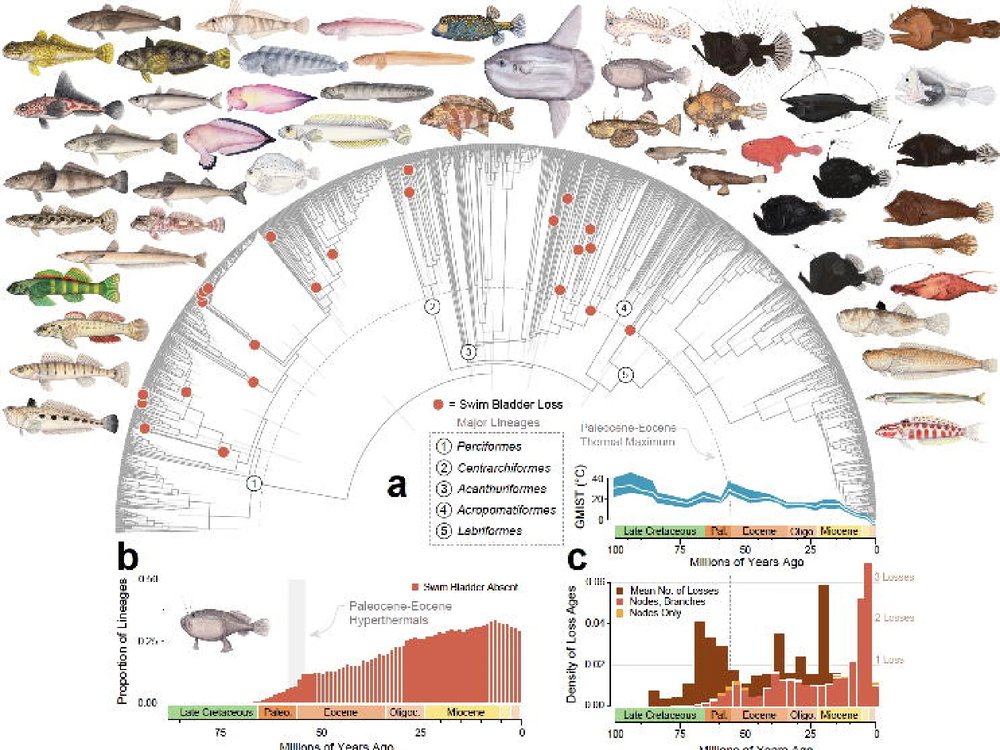
The macroevolutionary impact of an innovation reversal
bioRxiv preprint, 2026
Maps repeated losses of the swim bladder across spiny-rayed fishes and traces their timing through the Paleocene–Eocene hyperthermals.
-
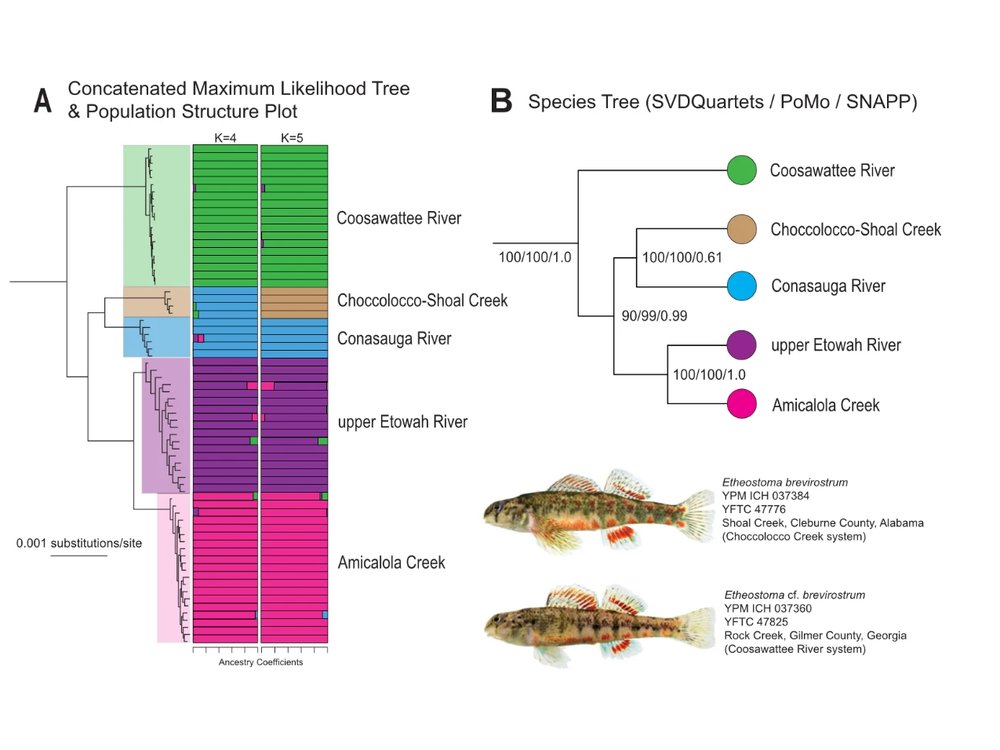
Linking fluvial barriers and habitat specialization in the evolution of microendemism in riverine fishes
Evolution 80 (9), 2030, 2026
In the Holiday Darter species complex, specialization to high-elevation streams on metamorphic rock, together with knickpoints that block dispersal between tributaries, created the isolation that produced microendemic lineages.
-
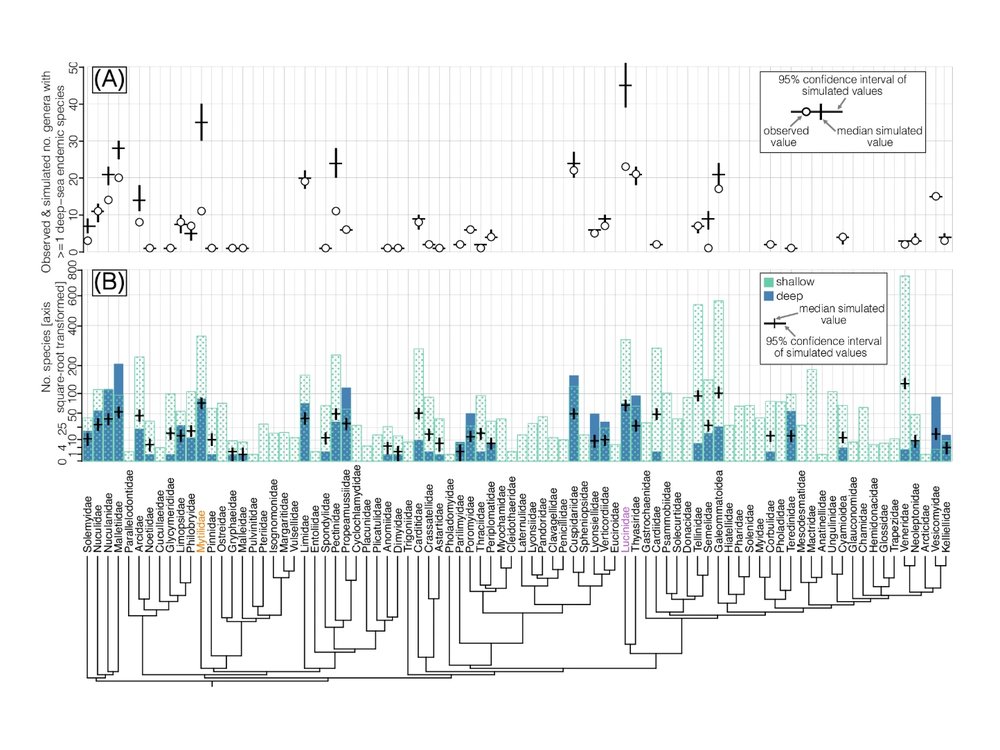
Alternative pathways into the deep sea: patterns in Bivalvia
Proceedings of the Royal Society B, 2026
Deep-sea endemic lucinid clams arrived piecemeal through as many as 16 independent entries, whereas mussels entered only four times and then diversified in place. The contrast may trace back to differences in ancestral feeding mode.
-
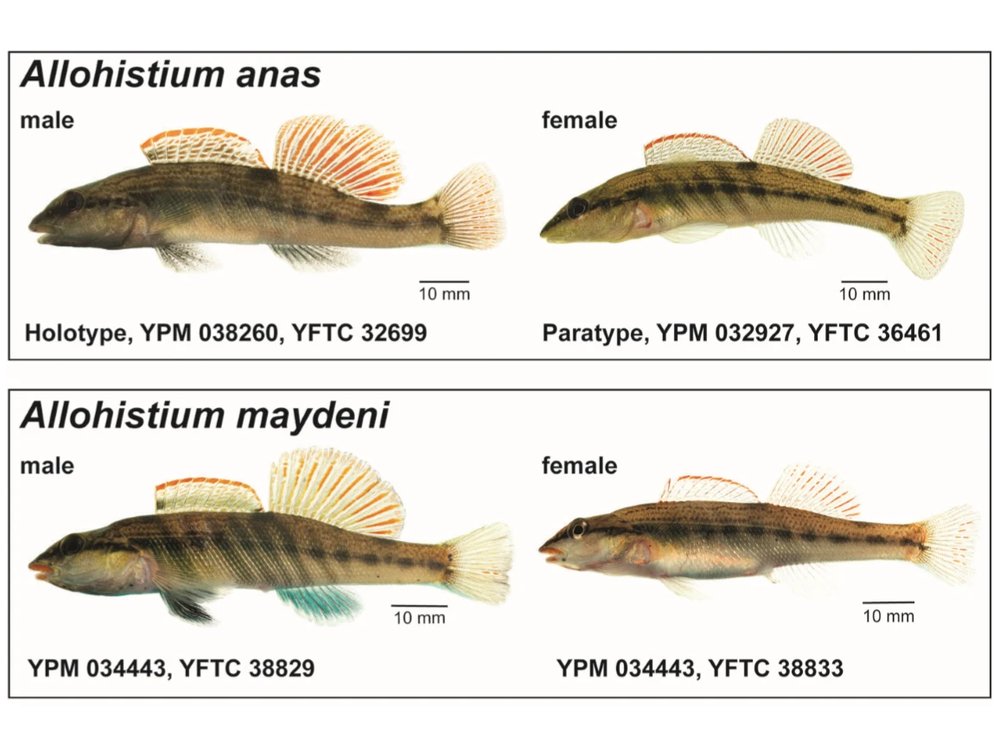
Genomic and phenotypic delimitation of species in a temperate aquatic biodiversity hotspot
Systematic Biology, 2026
Combines genomic and morphological data to delimit species of freshwater fishes in eastern North America, one of the world's temperate hotspots of aquatic diversity.
2025
-
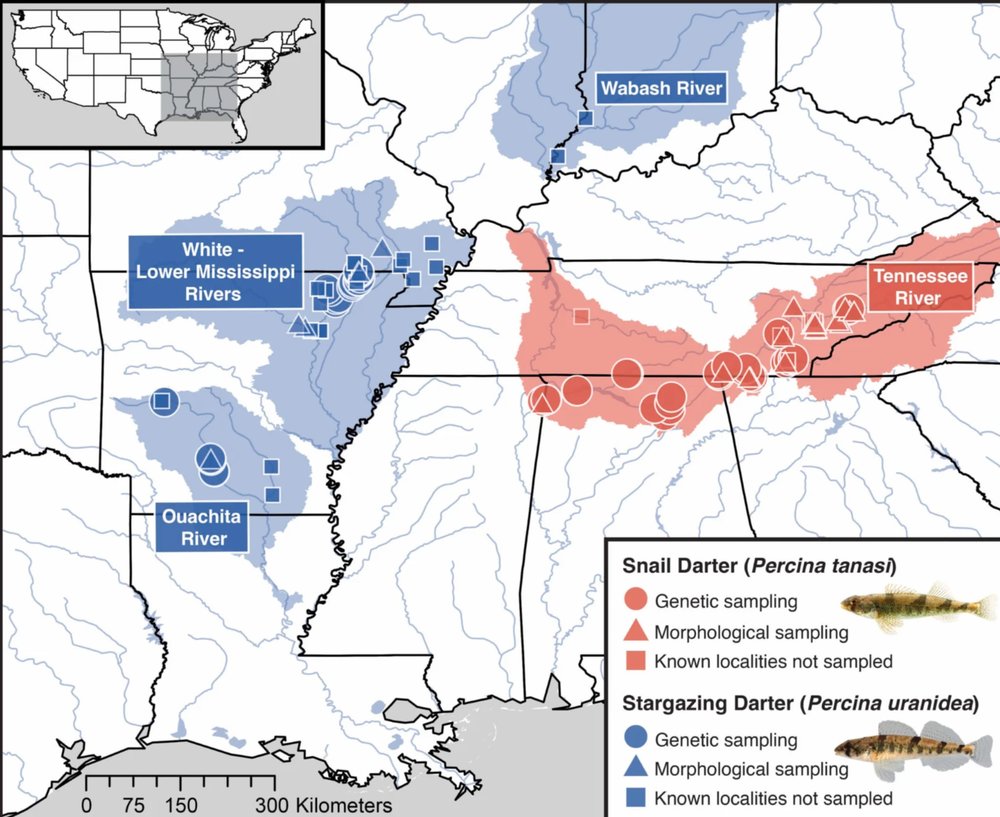
Comparative species delimitation of a biological conservation icon
Current Biology 35, 398–406, 2025
Genomic and morphological evidence shows that the Snail Darter, the fish at the centre of a landmark 1970s Endangered Species Act fight over the Tellico Dam, is a population of the Stargazing Darter rather than a distinct species.
2024
-
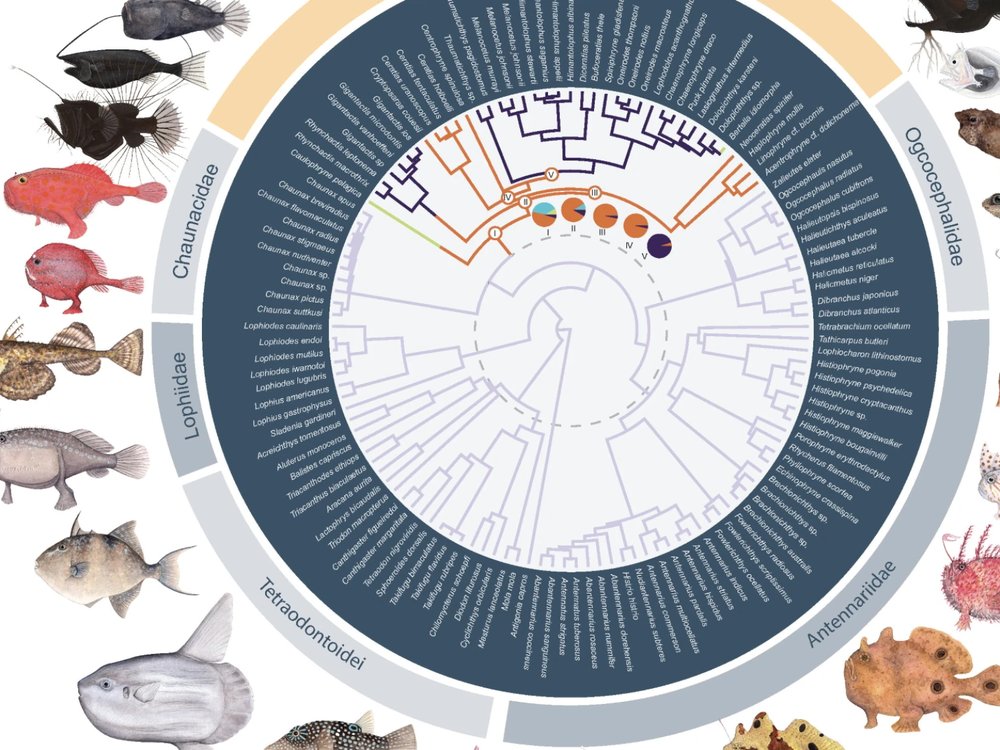
Synergistic innovations enabled the radiation of anglerfishes in the deep open ocean
Current Biology 34 (11), 2541–2550, 2024
Anglerfishes moved into the midnight zone 50–35 million years ago, during a period of global warming. Sexual parasitism, size dimorphism and the loss of adaptive immunity worked together to fuel their radiation.
2023
-
Species-level recognition and redescription of the Kentucky Arrow Darter, Etheostoma spilotum Gilbert (Percidae: Litocara)
Bulletin of the Peabody Museum of Natural History 64 (1), 39–80, 2023
Meristic, morphometric and genetic data support recognising the threatened Kentucky Arrow Darter as a distinct species.
-
Phylogenomics of Acanthomorpha: from ancient radiations to the tips of the tree
PhD dissertation, Yale University, 2023
Phylogenomic studies of spiny-rayed fishes, from Mesozoic and Cenozoic radiations down to species delimitation.
2022
-
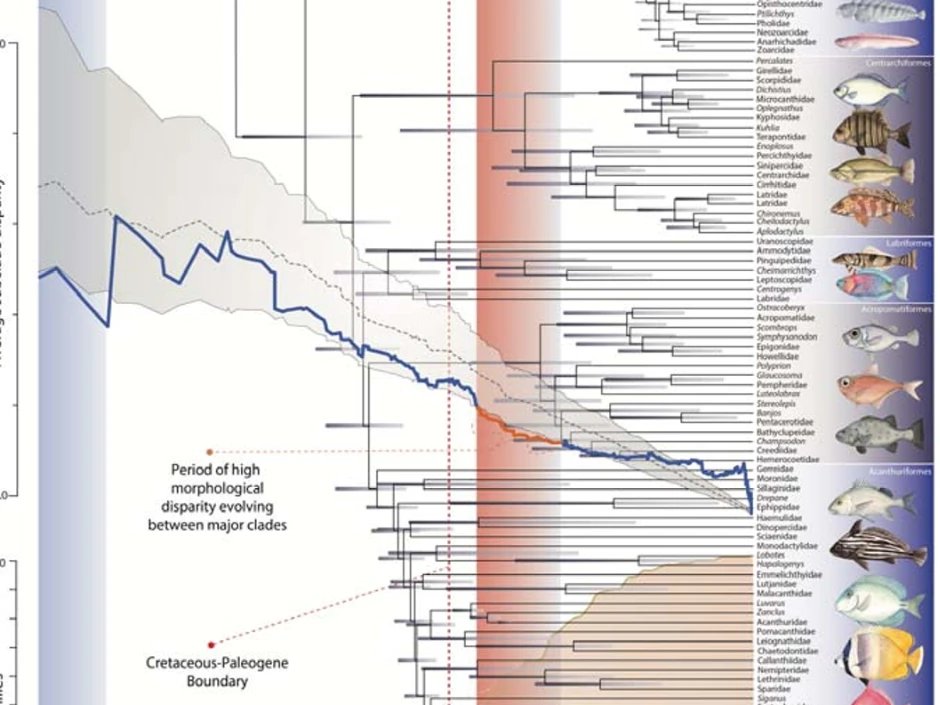
Prolonged morphological expansion of spiny-rayed fishes following the end-Cretaceous
Nature Ecology & Evolution 6 (8), 1211–1220, 2022
A time-calibrated phylogeny built from ultraconserved elements and sampling 91% of acanthomorph families shows that the major lineages arose before the K–Pg extinction, but their body shapes expanded long afterward.
-
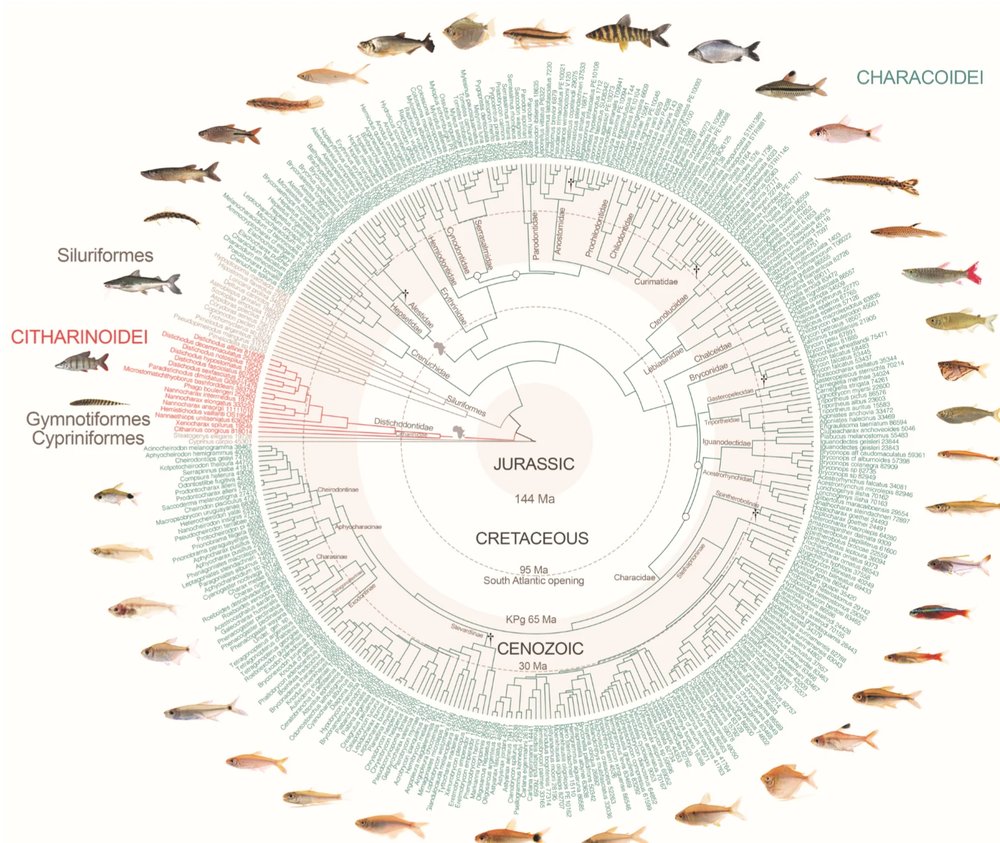
Accelerated diversification explains the exceptional species richness of tropical characoid fishes
Systematic Biology 71 (1), 78–92, 2022
1,288 ultraconserved element loci across 293 species reveal that Neotropical characoid fishes reached their exceptional richness through accelerated recent diversification.
In the news
- UChicago NewsAlternative pathways into the deep sea: patterns in Bivalvia2026
- Phys.orgAlternative pathways into the deep sea: patterns in Bivalvia2026
- Yale NewsComparative species delimitation of a biological conservation icon2025
- SmithsonianComparative species delimitation of a biological conservation icon2025
- Yale EEBSynergistic innovations enabled the radiation of anglerfishes in the deep open ocean2024
Get in touch
I'm always happy to talk about phylogenomics, fishes, bivalves, or machine learning in evolutionary biology.
ghezelayagh@uchicago.edu